
The UU Buddhist Fellowship had it’s first Convocation at the Garrison Institute in 2005. Since then we’ve had them approximately every 2 years (except with COVID interruptions). Sam Trumbore has faithfully recorded just about every one with video and audio. Here is the archive of those events stored on YouTube. They will be listed from our most recent ones and go back to the oldest ones. There is a treasury of video of teachers and leaders who are no longer with us.
2025
The 2025 UUBF Convocation was held at Bon Secours Retreat Center in Marriottsville, Maryland from April 11-13, 2025 with Lama Rod Owens as the featured guest teacher. Lama Rod is the author of The New Saints: From Broken Hearts to Spiritual Warriors, Love and Rage: The Path of Liberation Through Anger (a favorite of several UUBF Board members), and Radical Dharma: Talking Race, Love, and Liberation. More information about Lama Rod Owens can be found at https://www.lamarod.com. Dana Link for Lama Rod.
2023
Dr. David Robert Loy is a professor of Buddhist and comparative philosophy and Zen teacher in the Sanbo Zen tradition of Japanese Zen Buddhism. Loy is one of the founding members of the new Rocky Mountain Ecodharma Retreat Center, near Boulder, Colorado. He is the author of many books, including Ecodharma: Buddhist Teachings for the Ecological Crisis.
For our weekend together, Loy wrote:
“Traditional Buddhist teachings help us wake up individually and realize our interdependence with others. Today we need to wake up collectively in another way. We need to wake up to what is one of the greatest dangers that humanity has ever encountered. Buddhism can help us understand and respond appropriately to the climate emergency driven ecological crisis. Neither the Buddha nor Asian Buddhist traditions have faced the complex set of challenges of the twenty-first century. Yet Buddhism includes many teachings that are relevant to our situation.
There are profound parallels between our individual human struggles which Buddhism addressed and our ecological predicament today. The parallels suggest that the eco-crisis is as much a spiritual challenge as a technological and economic one. In both cases, at the root of the problem is our illusion of separation: that “I” am separate from others, and that we are separate from the natural world.
Perhaps the most important thing that Buddhism has to offer today is a new version of the bodhisattva — or ecosattva — path, which can respond to collective and institutionalized versions of greed, ill will and delusion (the three poisons). All this suggests, the ecological challenge is also a challenge to the ways we understand and practice Buddhism.”
2019
Making the Invisible, Visible:
A Multi-media Exploration of Race and Racism
in the U.S. through a Buddhist Lens
Guided by Dr. Jam Willis
Garrison Institute, Garrison, NY
April 25-28, 2019
Dr. Jan Willis is Professor Emerita of Religious Studies at Wesleyan University, CT and author of several books on Tibetan Buddhism including “Dreaming Me: Black, Baptist.and Buddhist – One Woman’s Spiritual Journey”
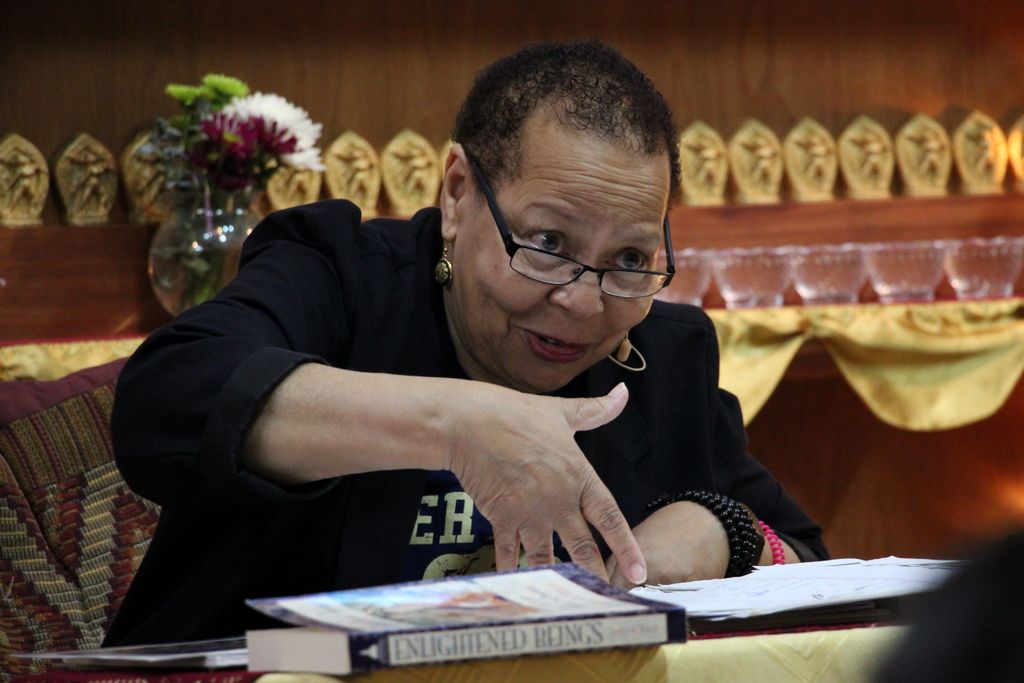
April 25 – 28, 2019
at Garrison Institute,
in Garrison, NY
Making the Invisible, Visible:
A Multi-medial Exploration of Race and Racism
in the U.S. through a Buddhist Lens”
Featuring Dr. Jan Willis Professor Emerita of Religious Studies at Wesleyan University, CT and author of several books on Tibetan Buddhism including “Dreaming Me: Black, Baptist and Buddhist – One Woman’s Spiritual Journey.
2017
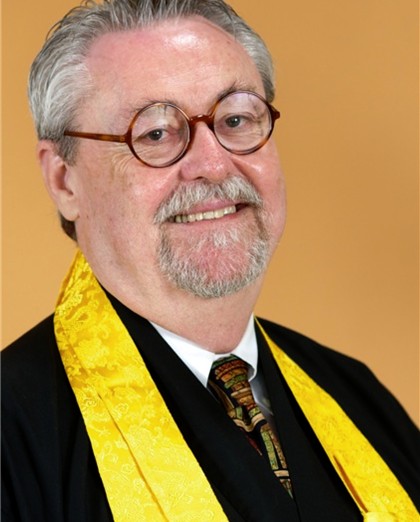
March 31—April 2
Menucha Retreat Center
Corbett, Oregon
Learning the Language of Dragons:
Zen Meditation and Zen Koans
James Ishmael Ford, Zen teacher and Unitarian Universalist minister says that Zen meditation, both its “just sitting” or “silent illumination” discipline and “koan introspection” are in fact the language of dragons. In our time together we will be introduced to the grammar of dragons, a bit of the vocabulary, and with that to throw ourselves into a little dragon language immersion.
Menucha Lodge overlooks the beautiful Columbia River Gorge, designated as a national scenic area with the greatest concentration of waterfalls in North America.
2015
After Buddhism:
Recovering the Dharma for a Secular Age
With Stephen Batchelor
March 20-22, 2015
Garrison Institute, Garrison, New York
“By returning to the earliest texts of the Buddhist canon, we will seek to clarify the distinctive vision of Siddhattha Gotama before it evolved into the orthodoxy of an institutional religion. This weekend of talks, workshops, meditations and discussions will explore how such a vision might address the questions and crises of contemporary culture.”
A former Buddhist monk, Stephen Batchelor is the author of Buddhism without Beliefs and Confession of a Buddhist Atheist. He teaches secular Buddhist meditation and philosophy worldwide, and lives in France.
2013
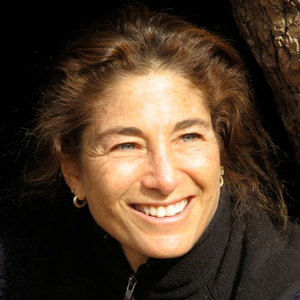
Tara Brach was our presenter in 2013. Unfortunately we don’t have video or audio from this event in our archives at this time.
2011
2009
Shinzen Young
Shinzen Young is an American mindfulness teacher and neuroscience research consultant.
His systematic approach to categorizing, adapting and teaching meditation, known as Unified Mindfulness, has resulted in collaborations with Harvard Medical School, Carnegie-Mellon University and the University of Vermont in the burgeoning field of contemplative neuroscience, and he is currently co-director of the Science Enhanced Mindful Awareness (SEMA) Lab at the University of Arizona.
Shinzen’s interest in Asia began at the age of 14 when he decided to attend Japanese ethnic school in his native city of Los Angeles. After majoring in Asian languages at UCLA, he entered a PhD program in Buddhist Studies at the University of Wisconsin. As a part of his thesis research, he lived as a Shingon (Japanese Vajrayana) monk for three years at Mount Koya, Japan. It was then that he received the name Shinzen (真善).
Also during that time, he became friends with Father William Johnston (author of Christian Zen). Fr. Johnston helped broaden Shinzen’s interests to include comparative world mysticism and the scientific study of meditative states.
Upon returning to the United States, his academic interests shifted to the dialogue between Eastern meditation and Western science.
2007
April 12-15, 2007
Garrison Institute, Garrison, New York
Unitarian Universalist Buddhists Bearing Witness
Our exploration for this gathering was socially engaged Buddhism. What are appropriate and skillful actions for Buddhists who have taken the vow to liberate all beings, and also UU’s who affirm a faith in the inherent worth and dignity of every person?
Our theme presenters were Bernie Glassman & Eve Myonen Marko. Roshi Bernie and Sensei Eve are founders of the Zen Peacemakers order. They collaborated in writing the book Bearing Witness: A Zen Master’s Instructions on Making Peace. Glassman is the first western dharma heir of Maezumi Roshi (1976) and a pioneer of the American Zen movement. He has taken the dharma to the marketplace founding the Greyston Mandala, a network of community development organizations based on Buddhist values. He has also organized meditation retreats at Auschwitz and on the streets of New York City.
We also had special performances by The Faithful Fools Street Ministry of San Francisco and Jason Shelton former UU Minister of Music, Nashville, Tennessee.
2005
Friday dinner, April 29 through lunch, May 1, 2005
Garrison Institute, Garrison, New York
The Purpose of Our First Convocation
To bring together Unitarian Universalists from all over the Continent who practice or have an interest in Buddhism to create a unique opportunity to reflect on Buddhist influences within our association, to learn from each other and discover common interests and directions for the future.
The Chalice and the Wheel:
The Meeting and Mutual Transformation of
American Unitarianism and Japanese Buddhism
by Dr. Jeff Wilson
Awakening the Wisdom that Has No Teacher:
Mind to Mind Transmission in the Zen Tradition
by John Daido Loori, Roshi
Lama John Makransky
John Makransky, PhD, has been a professor of Buddhism and Comparative Theology at Boston College, senior advisor for Chokyi Nyima Rinopche’s Center of Buddhist Studies in Nepal, a Contemplative Fellow of the Mind and Life Institute, and developer of the Sustainable Compassion Training model for accessing innate capacities of unconditional care and awareness. John’s scholarly writings focus on connections between practices of devotion, compassion, and non-dual wisdom in Indo-Tibetan Buddhism, on adapting Buddhist practices to meet contemporary minds, and on theoretical issues in interfaith learning. In 2000, John was ordained a Lama, a meditation teacher of innate compassion and wisdom, within the Nyingma Dzogchen tradition of Tibetan Buddhism. As a meditation teacher, John is known for guiding participants in their discovery of the underlying powers of unconditional love and wisdom. Since 2000, John has taught meditations of innate compassion and wisdom for modern Buddhists, for those in other spiritual traditions, and for people in caring roles and professions (sustainablecompassion.org).
Beth Roth
Beth Roth, MSN, has been practicing meditation since 1987 through the Insight Meditation Society in Barre, MA and teaching meditation since 1993. She received her Master’s Degree in Nursing from Yale University in 1987, and in 1993 founded the Mindfulness-based Stress Reduction Program at the Community Health Center in Meriden, CT, where she teaches meditation in Spanish and English to inner-city patients with chronic and life-threatening illnesses. Since 1993 she also teaches the Mindfulness-based Stress Reduction Program as an accredited elective course for graduate students at Yale University. She teaches courses in Buddhism and meditation at the Unitarian Society Congregation in Hamden, CT. She does teaching, consulting, conference presentations and staff development training for hospitals, health centers and schools throughout Connecticut. She has published numerous research and descriptive articles and a book chapter about her work teaching meditation, and writes a monthly Family Dharma column for Tricycle e-magazine (www.tricycle.com) about sharing Buddhist teachings and meditation practices with children. She lives in New Haven, CT with her husband, two children, and a Border Collie.